


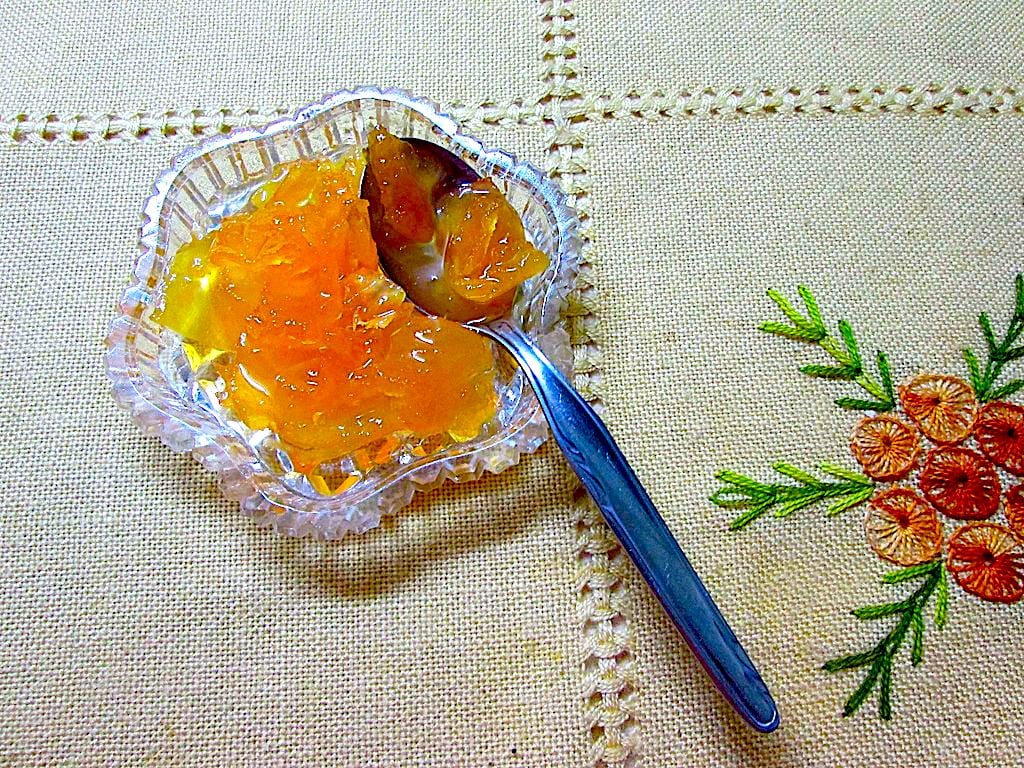
The delicious age-old tradition in Greece of offering “Spoon
Sweets” to visitors goes way back to the fourteenth century, when the
Byzantines adopted the custom from Arab traders. It was a tradition as
old as time in the Arabic world to serve the sweets to guests as a
gesture of hospitality.
Spoon sweets are exactly what they sound like: just a spoonful of
sweets. This tradition still lives on today throughout Greece and
Cyprus. When someone stops by your home, you offer them a drink and a
“spoon sweet”, which is a spoonful of preserves made from nutritious
fruits, served on a spoon.
Today, the sweet treats are commonly served with a cup of Greek coffee
or a glass of cold water, and the ingredients are much the same as they
were hundreds of years ago. The delicious desserts are made from whole
fruit, fruit pieces, nuts, purees and even tree resin.

Some favorite fruity sweets are made from citron, figs, oranges, and other fruits. You’ll come across different variations of the treat as you travel all over Greece, and it isn’t even uncommon to be offered one while visiting a cafe — especially in villages — to accompany your Greek coffee.
“Ypovrichio:” The unique Greek spoon sweet
However, one of the favorite and most iconic spoon sweets that Greeks enjoy — both young and old — comes from the island of Chios and is made from tree resin. Greeks call it the “ypovrichio,” literally “submarine” in Greek, because it is eaten while submerged under water, in a drinking glass.
Ypovrichio comes in different flavors, such as vanilla, or as mastic — since it is made from mastic tree resin, for which the island of Chios is famous.
And how exactly, you may ask, do you eat this sugary fondant? Ypovrichio is served simply on a teaspoon which you dip into a glass of ice-cold water. Once your spoon is submerged in the water, the resin begins to soften.
It gradually becomes like a smooth fondant which you eat by licking the spoon… like a fondant lollipop. But one with ancient roots! Sweet traditions such as these are just another of the many things which make Greece unique.
Comments
Post a Comment