


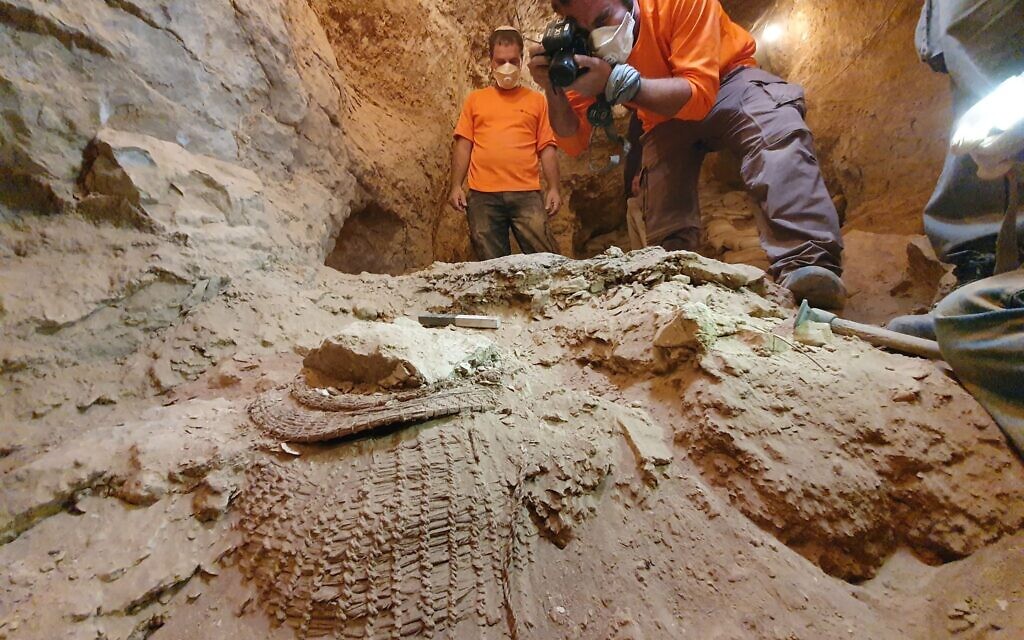
Astounding discoveries of Biblical scroll fragments in a cave in Israel’s Judean desert that were unearthed in daring “rescue missions” before looters could find the priceless treasures were shown to the public on Tuesday morning.
Including two dozen Bible scroll fragments from the Books of Zechariah and Nahum, the world’s oldest basket and a 6,000-year-old mummified child, the findings are among the most spectacular in recent memory.
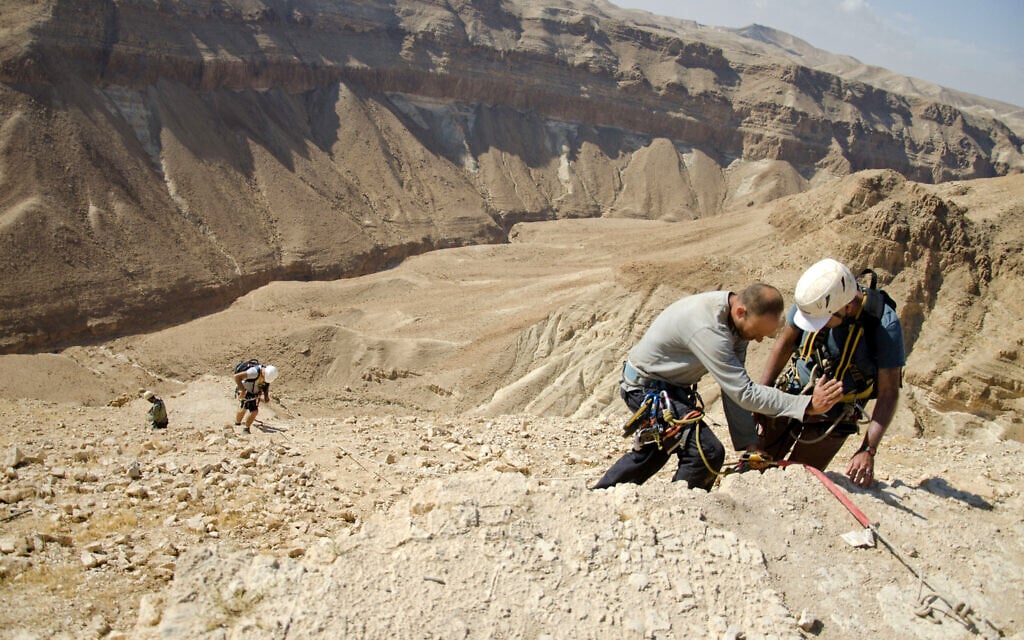
Coins from the era of the Bar Kochma Revolt were also found in the caves, to which researchers had to rappel down the sides of cliffs to access. According to an Israel Antiquities Authority (IAA) press release, the cave is “flanked by gorges and can only be reached by rappelling precariously down the sheer cliff.”
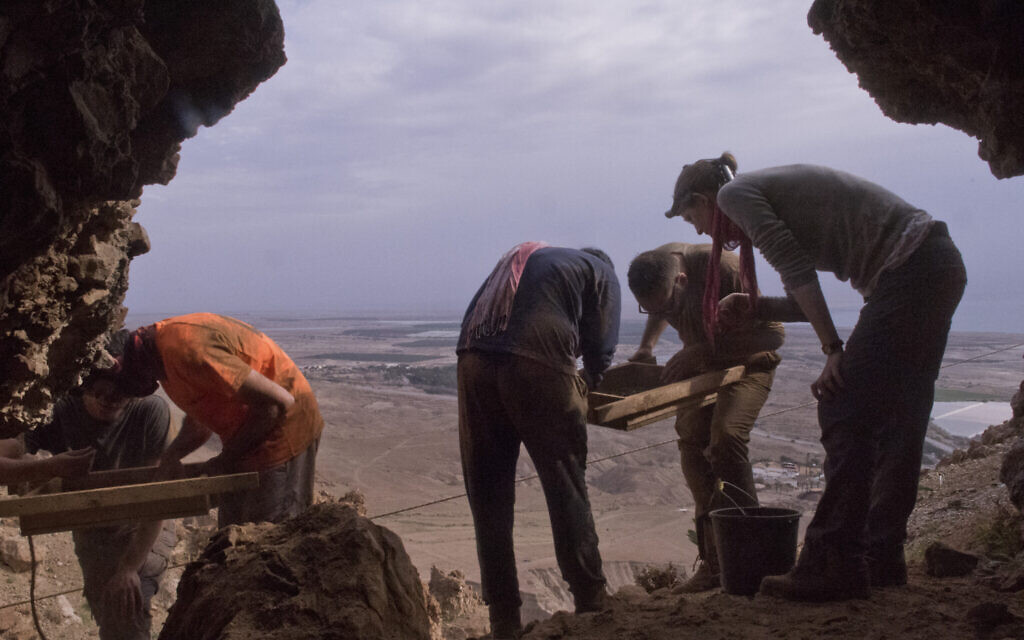
Archaeologists and volunteers, including many youths from pre-military programs working for the Israeli Antiquities Authority, made the finds.
The discovery of the giant basket, located in Muraba‘at Cave, dated back 10,500 years, was made by the preparatory students.
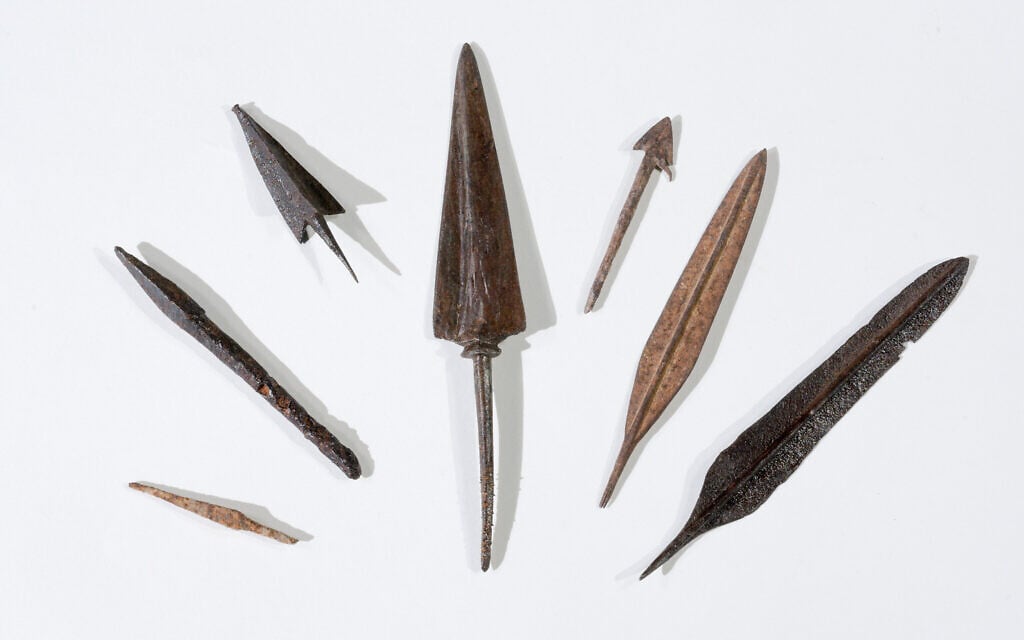
Arrowheads from the time of the Roman Empire were also found in the caves.
But the most stunning discovery of all were the 2,000-year-old fragments of the Biblical prophet books, comprising the first such discovery in 60 years.
In what the Israeli press called a “daring rescue operation,” the texts were taken from the site before looters, who frequently target such caves, could reach them.
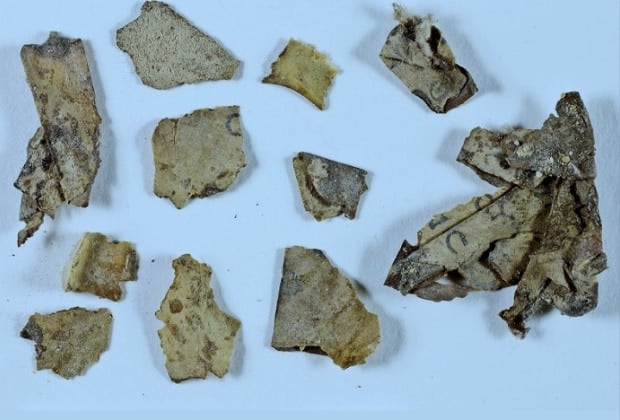
Consisting mostly of Greek translations of the books of Zechariah and Nahum, from the Book of the Twelve Minor Prophets, they were written by two different scribes, according to handwriting variations detected.
Archaeologists from the Israeli Antiquities Authority state that only the name of God is written in Hebrew in the texts.
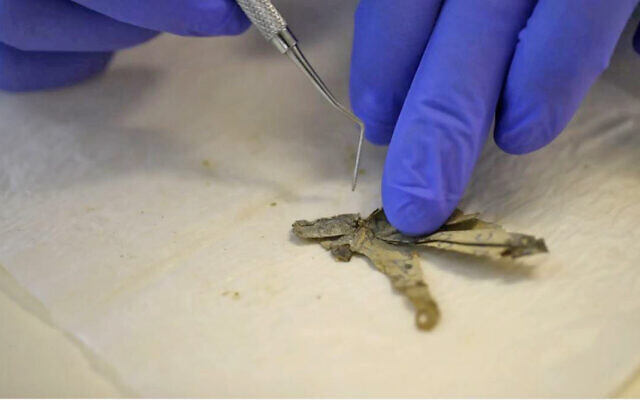
The Biblical scroll fragments found this week are parts of the larger scroll, found in the 1950s, in the same cave, called the “Cave of Horror” in Hebrew, which is situated 70 meters ( 260 feet) below the top of a cliff. The Cave of Horror was also where 40 skeletons were found, including the 6,000-year-old mummy of a child.
After the discovery of the Dead Sea Scrolls in the Judean Desert by Bedouin shepherds 70 years ago, the area has become a haven for looters who attempted to pillage any other valuable artifacts from the caves.
IAA director Israel Hasson, who led the widespread rescue operation, said in a press release “The desert team showed exceptional courage, dedication and devotion to purpose, rappelling down to caves located between heaven and earth, digging and sifting through them, enduring thick and suffocating dust, and returning with gifts of immeasurable worth for mankind.
Biblical scroll fragments “wake-up call to the state”
“The newly discovered scroll fragments are a wake-up call to the state. Resources must be allocated for the completion of this historically important operation. We must ensure that we recover all the data that has not yet been discovered in the caves before the robbers do. Some things are beyond value,” Hasson declared.
Trying valiantly to be one step ahead of those pillagers of history, a project was launched in 2017 to excavate a series of caves in the Judean Desert. As many as 20 caves in all may be researched next as part of the effort.
“For years we chased after antiquities looters. We finally decided to pre-empt the thieves and try reaching the artifacts before they were removed from the ground and the caves,” said Amir Ganor, head of the Theft Prevention Unit of the IAA.
Some caves unreached by humans in the last 2,000 years
A total of 500 caves have so far been systematically researched and excavated by three teams, led by archaeologists Oriah Amichai, Hagay Hamer and Haim Cohen.
Amazingly, as much as 25 percent of the Judean Desert has not yet been surveyed, according to Ganor.
With the help of drones and high-tech rappelling and mountain climbing equipment, archaeologists and volunteers were able to access many hitherto “unreachable” caves — some of which, the archaeologists say, have not been visited by a human being in two thousand years.
Some of the oldest books of the Bible ever found
The scrolls, which were discovered in clumps and rolled up in the Cave of Horror, will be conserved and studied by the IAA’s Dead Sea Scrolls Unit, headed by Tanya Bitler, Dr. Oren Ableman and Beatriz Riestra.
This group has reconstructed 11 lines of Greek text from the Biblical scrolls that was translated from Zechariah 8:16–17, as well as verses from Nahum 1:5–6. There are nine other such fragments that were discovered by Yochanan Aharoni, who first surveyed the Cave of Horrors back in 1953.
The scrolls were written in the Paleo-Hebrew script used during the First Temple period; some adherents of the Bar Kochba revolt (132–136 CE), also used the script including on coinage. Others in the Qumran community also used the script.
In one of the most prominent discoveries already made after the finding of the scrolls, researchers have determined that the “new” Greek translation is different from the traditional Masoretic texts of these books.
The IAA statement said “These differences can tell us quite a bit regarding the transmission of the biblical text up until the days of the Bar Kochba Revolt, documenting the changes that occurred over time until reaching us in the current version.”
Aside from two silver scrolls dating back to the late 7th to early 6th century BCE discovered in Ketef Hinnom in Jerusalem, which were engraved with the biblical Priestly Blessing, the Dead Sea Scrolls themselves are considered the earliest known copies of the books of the Bible.
They date back to 400 BCE to 300 CE, according to archaeologists.
Basket predates human use of pottery
The gigantic basket found by the team, dating back some 10,500 years, predates pottery by some 1,000 years. That discovery alone was hailed by the IAA as “currently unparalleled worldwide.”
The vessel, which can hold 90-100 liters (24 — 26 gallons) was found at Muraba‘at Cave, and due to the extremely arid atmosphere of the surrounding area, it was found completely intact. That cave was where Roman-era papers had previously been found as well. The basket is currently being studied by IAA’s Dr. Naama Sukenik and Dr. Ianir Milevski.
Using carbon dating technology, the basket, found nearly empty, was determined to have been made in the Pre-Pottery Neolithic era by Prof. Elisabetta Boaretto of the Scientific Archaeology Unit of the Weizmann Institute of Science.
“As far as we know, this is the oldest basket in the world that has been found completely intact and its importance is therefore immense,” said the IAA.
“Only future research of a small amount of soil remaining inside it will help us discover what it was used for and what was placed in it.”
The remains of a 6,000-year-old mummified child were also found in the cave, still wrapped up lovingly in a blanket. The child, estimated to be between 6-12 years of age, was found in a shallow pit under two stones, after having been placed there in the fetal position.
Mummified child found lovingly wrapped in blanket
Prehistorian Ronit Lupu explained that the child had been mummified due to the extreme aridity of the atmosphere.
“It was obvious that whoever buried the child had wrapped him up and pushed the edges of the cloth beneath him, just as a parent covers his child in a blanket. A small bundle of cloth was clutched in the child’s hands,” said Lupu.
The cloth around the child, as well as other organic materials, including its hair and even skin and tendons, were also well-preserved.
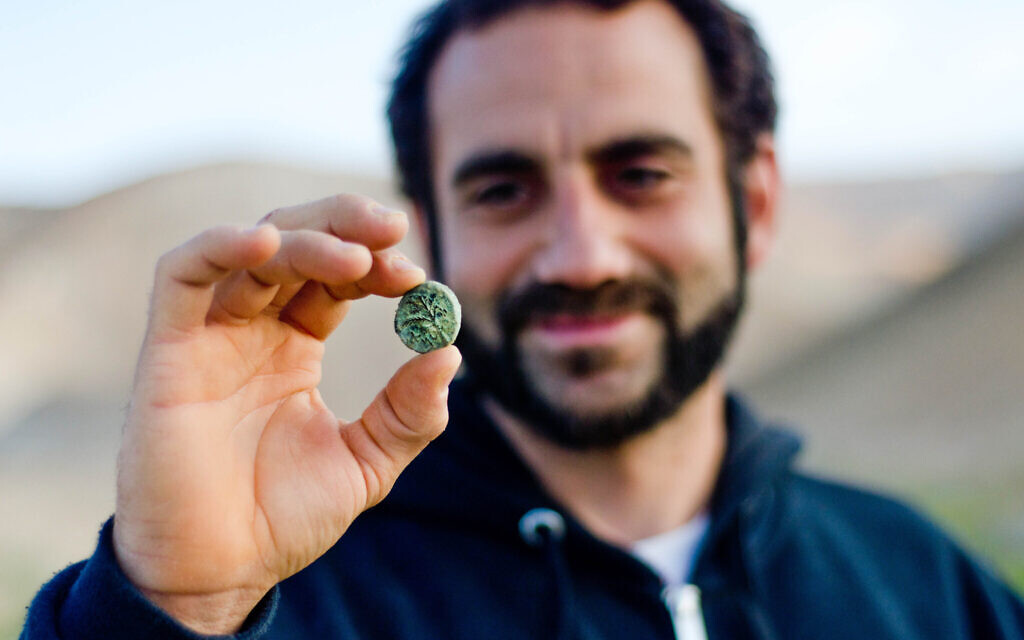
Adding to the riches of the findings were coins and other items left by rebels from the Bar Kochma revolt at the Caves. A cache of coins that had been over struck with the symbols of the Jewish rebels, including a harp and a date palm, along with arrowheads and spearheads, fabric, sandals and even lice combs, were found in the cave.
Ofer Sion, the head of the IAA’s Surveys Department, stated that “The high cliffs of 300-400 meters [985-1,300 feet] in a single drop with these enigmatic ravines that no one reaches were the ultimate haven. And in one period in human history, families fled to the caves in the Judean Desert, and we really don’t know anything else.”
Archaeologist Oriah Amichai explained that the rebels, most likely families, who left belongings there had planned what they would take from home, “when one day, when the war will be finished, what they will be able to use to build a new life. We come here and reconstruct the lives of those who didn’t survive in the end.”
The archaeologists who discovered the biblical scrolls plan to continue to searching for remains and artifacts that show the entire past of human history in the area, regardless of the religious beliefs of those who lived there.
Avi Cohen, the CEO of the Ministry of Jerusalem and Heritage, stated “These finds are not just important to our own cultural heritage, but to that of the entire world.”
Comments
Post a Comment