Aris Konstantinidis: The Architect Who Helped Bring Modernism to Greece


Aris konstantinidis
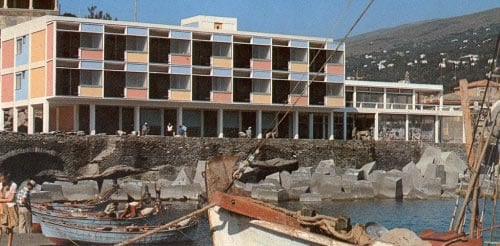
Aris Konstantinidis’ Xenia hotel on the Greek island of Andros. Credit: Public Domain

His quote “I believe in dreams, not fantasy,” marked the life and work of famed Greek architect Aris Konstantinidis (1913-1993).

Long heralded as the father of Greek architectural modernism, Konstantinidis built many iconic buildings around Greece during his long career, and helped expand Greece’s tourism industry with his many hotels.

Born in Athens in 1913, Konstantinidis left to study architecture in Germany in 1931.

Konstantinidis encounters Modernist architecture in Germany

Before the rise of the Nazis in 1936, and their campaign to suppress Modernist art and architecture, which they considered “degenerate,” there was a brief cultural renaissance, during which Modernist architecture flourished.

At the time, Germany, known then as the Weimar Republic, was a hotbed of scientific research about sex and gender, emerging art and architecture movements, and innovative music styles, all of which the Nazis later used as examples of “degeneracy.”

It was during this period of artistic exploration that Konstantinidis was introduced to German modernist architecture, especially the Bauhaus movement, which rejected embellishment and considered the form of a building of equal importance to its function.

Strong lines and geometric shapes are emblematic qualities of the minimalist European modernist buildings, considered as severe and brutal by some.

Returning to Greece in 1936, Konstantinidis incorporated these qualities of European modernism with local Greek building tradition and history.

Whereas the Nazi’s saw a rejection of tradition in modernist architecture, preferring a neoclassical style, Konstantinidis saw many parallels between Greece’s ancient past and native architecture and the new, experimental modernist style blooming around Europe.

Removing the embellishment from ancient Greek temples, their strong vertical lines of columns and geometric qualities resembled the aims of modernism.

Similarly, the simple, white-washed homes found in islands all over Greece, both functional and beautiful, seemed to have modernist qualities from long before the movement even began.

Embracing the Greece’s native architectural traditions and incorporating elements of the country’s stunning landscape, Konstantinidis crafted a new modernist style, distinct to Greece, which honored the beauty of simplicity.

Greece’s state-run Xenia hotels

In the late 1950s, after working in the planning department of Athens and the Ministry of Public Works, Konstantinidis was hired by the Greek National Tourism Organization for their latest project, the construction of a series of hotels called “Xenia” around the country.

In the middle of the twentieth-century, Greece was only beginning to see a small trickle of international tourism. Hotels at that time were mainly found in large cities and a few islands.

Hoping to capitalize on the country’s natural beauty and fascinating history, the Greek National Tourism Organization set out to construct kiosks, organized beaches, and other facilities necessary for tourism in areas that were relatively unknown outside of Greece.

Part of this mission was the construction of hotels in the trendy and sophisticated mid-century modernist style at the most beautiful destinations in the country, especially those that had no other hotels to house tourists.

The Xenia project was one of Greece’s largest infrastructure schemes, and its proponents hoped that increased tourism would bring an economic boost to rural areas which had been left behind by industrial development.

Konstantinidis, along with a team of other modernist architects, designed hotels in breathtaking locations such as Mykonos, Andros, Chalkidiki, Kalabaka, and Olympia from 1957 to 1967.

At their time, the publically-funded hotels were heralded around Europe for their beauty and cutting-edge designs.
Aris konstantinidis
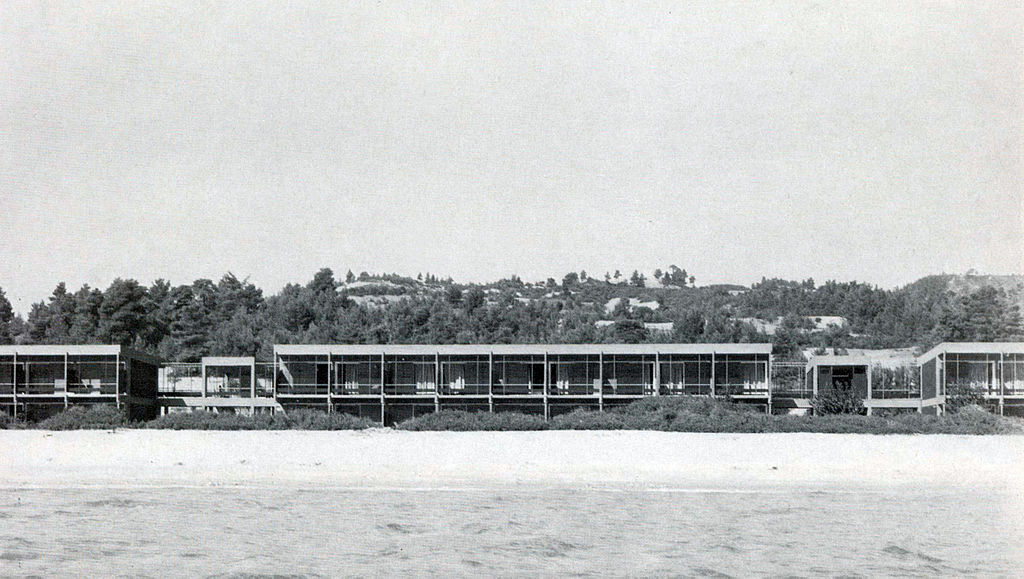
Aris Konstantinidis’ Xenia Hotel in Paliouri, Chalkidiki. Credit: Public Domain/Wikimedia Commons.

In the 1980s, the Greek National Tourism Organization officially ended the Xenia project, and its iconic hotels were sold off to private operators.

After this, many of the architectural masterpieces were either left in ruins, and the ones still in operation were substantially changed during later renovations.

The legacy of Aris Konstantinidis

The Xenia hotel in Paliouri, Chalkidiki, along with the hotel in Andros, are notably in ruins — both are ugly, decaying shells of what were once shining examples of Greek modernism, hailed around Europe, which accommodated a great many fashionable tourists in the mid-twentieth century.

In addition to hotels, Konstantinidis designed public housing in cities around Greece such as Athens and Serres. He also designed the plans for the Archaeological Museums of both Ioannina and Komotini.

His private endeavors include the stunning home of Greek painter Yiannis Moralis on the island of Aigina, where the painter spent nearly half the year, creating some of his best known works.

Konstantinidis wrote many books and essays about architecture, art, and literature, and was given an honorary doctorate from the University of Thessaloniki for his contributions to Greek architecture.

He also taught as a visiting professor at the Zurich Polytechnic, and was a member of the Academy of Fine Arts, Munich.

Konstantindis married renowned Greek sculptor Natalia Mela, the granddaughter of famed General Pavlos Melas, and the couple had two children. He died at the age of 80 in Athens in 1993.

Comments

Popular Posts

Μπέος: «Εύστοχα χαρακτηρίστηκε φτύσιμο στα μούτρα των μελών της ΕΕΑ»

Καρφιά προς την Επιτροπή Επαγγελματικού Αθλητισμού έριξε με δήλωσή του στα social media ο Αχιλλέας Μπέος. Με αφορμή την απόφαση του CAS για την υπόθεση ΠΑΟΚ-Ξάνθης, ο δήμαρχος Βόλου θυμήθηκε τις ενέργειες της επιτροπής στην περίπτωση του Ολυμπιακού Βόλου το 2011 όταν εκείνος ήταν ο ισχυρός άνδρας της ομάδας. Επίσης εξέφρασε την απορία του για το ότι κανείς μέχρι σήμερα δεν έχει υποβάλλει την παραίτησή του. Αναλυτικά όσα έγραψε ο Αχιλλέας Μπέος: «Η απόφαση του Διεθνούς Αθλητικού Δικαστηρίου (CAS) για την υπόθεση των ΠΑΟΚ–Ξάνθης, αναμφίβολα είναι ένα ηχηρό χαστούκι γι αυτό που στην Ελλάδα ονομάζουμε Επιτροπή Επαγγελματικού Αθλητισμού, που υποτίθεται αξιολογεί, κρίνει και αποφασίζει αντικειμενικά και με βάση το ισχύον Δίκαιο και στην πραγματικότητα αποδεικνύεται ένα εργαλείο άσκησης μικροπολιτικής και ικανοποίησης αθέμιτων επιθυμιών και επιδ...

The Fascinating History of Thessaloniki’s Iconic White Tower

The White Tower. Credit: ΣΟΛΑΚΙΔΗΣ ΣΩΤΗΡΙΟΣ /Wikimedia Commons/ CC BY-SA 4.0 Residents of Thessaloniki, Greece’s second largest city, often use its White Tower as a point of reference when giving directions in the beautiful seaside city. That’s because the tower is by far Thessaloniki’s most iconic monument. The ancient city, located in northern Greece, has a rich history stretching from antiquity to the modern era, but is most noted for its importance during the Byzantine period. During that time, Thessaloniki was a competitor with the great city of Constantinople in terms of its wealth and influence. The White Tower was a witness to many of the city’s most important historical events, and its role in Thessaloniki changed as did the ownership of the city itself throughout the millennia. Studying the history of the White Tower means learning the history of Thessaloniki. The Tower’s strategic location along the Thermaic Gulf made it perfect for guarding the city from thre...

Inside the Magnificent Minoan Palace of Knossos in Crete

The Minoan palace at Knossos. Credit: Gary Bembridge /Wikimedia Commons/ CC-BY-2.0 The Palace of Knossos, located about five kilometers (three miles) south of Heraklion on Kephala hill, was the largest of all the Minoan palaces in Crete. It was also at the core of the highly sophisticated civilization that flourished on the island over 3,500 years ago. The discovery of the Minoan Palace of Knossos The discovery and subsequent excavation of the palace dates back to the beginning of the twentieth century. Before then, Knossos had only served as a place mentioned in Greek mythology. The first modern scholar to take a serious interest in the area was the German Heinrich Schliemann, who in 1870 had excavated the site believed to be Troy. Schliemann was certain that a major Minoan palace lay hidden near Heraklion, but the Ottoman authorities who still ruled the island at the time denied any permission to dig there. Years afterward, the British archaeologist Arthur Evans, inspired b...

Ten Unforgettable Things to Do Around Syntagma Square in Athens

  Syntagma Square, Athens. Credit: Public Domain Syntagma Square has literally been the very heart of Athens ever since the city became the capital of the modern Greek state. With the Greek Parliament building and the Tomb of the Unknown Soldier looming over it, it is rich with history and is the place where most major events of the last two centuries have taken place. Its name in Greek means “Constitution Square,” a name granted by Greece’s first modern royal, King Otto, on September 3, 1843, after an uprising of the people. This was a smart political move, since the royal palace overlooked the square. In 1934, the royal palace was turned over to the Greek Parliament, and ever since that time, Syntagma Square has been the place where all public protests and demonstrations have taken place. Syntagma Square home to historic demonstrations and protests In December of 1944, just after the departure of the occupying Nazi troops, a people’s rally at the square was marred b...

Άποψη Κ Μητρόπουλου

 Άποψη

Άποψη ΚΥΡ


Θεσσαλονίκη: Εκατοντάδες μερίδες φαγητού σε αστέγους από τοπική επιχείρηση εστίασης

Στη Θεσσαλονίκη, μια επιχείρηση εστίασης αποδεικνύει εμπράκτως τι σημαίνει ευαισθησία και κοινωνική ευθύνη. Πρόκειται για το εστιατόριο του Στέφανου Σαράτση που έχει αρχίσει αυτή την προσπάθεια τους τελευταίους δύσκολους μήνες. Συμπαραστάτες του γνωστοί και άγνωστοι πολίτες που βοηθούν όσο μπορούν.
  Ξέφυγαν εντελώς οι Τούρκοι απόστρατοι -Ονειρεύονται απόβαση σε ελληνικά νησιά Ο ναύαρχος ε.α. του τουρκικού Ναυτικού Τζιχάτ Γιαϊτζί, γνωστότερος ως εμπνευστής του παράνομου τουρκολιβυκού μνημονίου για την ΑΟΖ, δήλωσε, ότι χάρη στην συμφωνία αυτή η Λιβύη πήρε τέσσερα νησιά από την Ελλάδα και δεκάδες τ.χλμ. θαλάσσιων εκτάσεων, χωρίς όμως να αναφέρει ποια νησιά ήταν αυτά που αποκάλεσε μεν ελληνικά, αλλά τώρα είναι… λιβυκά! Ο Γιαϊτζί, γνωστός «μαϊντανός» των τουρκικών ΜΜΕ «εξήγησε», κατά τη διάρκεια συνέντευξής του στο κανάλι Al-Jazeera Mubasher, ότι «αυτή η συμφωνία παρείχε στη Λιβύη "39 χιλιάδες χιλιόμετρα υδάτινης επιφάνειας, μαζί με 4 ελληνικά νησιά"», προσθέτοντας ότι «εάν η Λιβύη είχε υπογράψει τη συμφωνία...

Απειλεί με αντίποινα η Τουρκία

7 Η δήλωση του προέδρου των ΗΠΑ Τζο Μπάιντεν ότι οι σφαγές των Αρμενίων κατά την Οθωμανική Αυτοκρατορία συνιστούν γενοκτονία είναι "απλά εξωφρενική" και η Τουρκία θα απαντήσει με διάφορους τρόπους τους επόμενους μήνες, δήλωσε σήμερα ο εκπρόσωπος της τουρκικής προεδρίας. Ο Τζο Μπάιντεν παρέκαμψε την επί δεκαετίες προσεκτικά βαθμονομημένη γλώσσα του Λευκού Οίκου για τις σφαγές του 1915, ικανοποιώντας την Αρμενία και τη διασπορά της στις Ηνωμένες Πολιτείες, αλλά επιτείνοντας περαιτέρω τις εντάσεις στις σχέσεις μεταξύ της Ουάσινγκτον και της Άγκυρας, δύο συμμάχων του ΝΑΤΟ. "Θα υπάρξει αντίδραση διαφορετικής μορφής και είδους και βαθμού τις επόμενες ημέρες και μήνες", δήλωσε ο Ιμπραήμ Καλίν, ο εκπρόσωπος και σύμβουλος του προέδρου Ταγίπ Ερντογάν σε συνέντευξη που παραχώρησε στο Reuters. Ο Καλίν δεν διευκρίνισε εάν η Άγκυρα θα περιορίσει την πρόσβαση των ΗΠΑ στην αεροπορική βάση του Ιντσιρλίκ στη ...

Άποψη


Airline Training Center

Car 'n Motion

Αthletix.gr

Φόρμα επικοινωνίας

Name

Email *

Message *